Light
Place the terrarium in bright, indirect light. Avoid strong direct sun, especially through south- or west-facing glass, because the vessel can heat rapidly.
Terrariums usually need less intervention than ordinary houseplants. The key is to observe the moisture, light and growth inside the glass and respond gently.
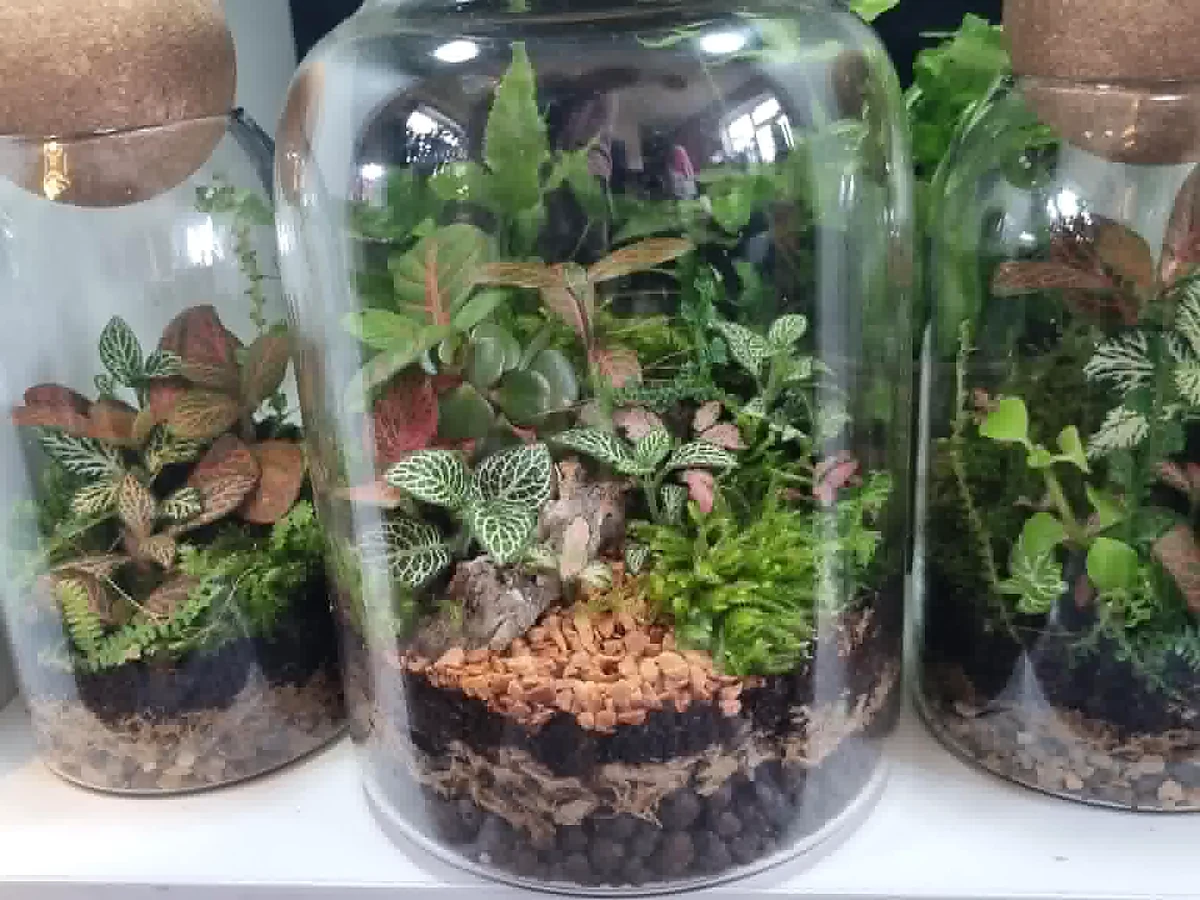
Place the terrarium in bright, indirect light. Avoid strong direct sun, especially through south- or west-facing glass, because the vessel can heat rapidly.
Water only when the compost is beginning to look dry and condensation has been absent for several days. Add a small amount, then wait and reassess.
A light mist on the glass is normal. If condensation is heavy all day, remove the lid or cork for a few hours so excess moisture can escape.
Remove dead or yellowing material promptly. Trim growth if plants touch the glass or begin to overwhelm neighbouring plants.
Response: open the terrarium for several hours, remove damaged material and do not add water.
Response: add a small amount of water around the planting, avoiding sudden saturation.
The exact needs of a terrarium depend on its plants, vessel, room temperature and light. When uncertain, contact My Bio-Harmonies before making a major change.
Yes. A closed terrarium naturally cycles moisture. Light misting or droplets that appear and clear are usually part of that cycle. Constant, heavy condensation suggests the system may be too wet.
Usually not. Fertiliser can encourage rapid growth that outgrows the vessel and may upset the balance of the planting.
A bright windowsill may be suitable if it is protected from direct sun and temperature extremes. A position near rather than directly against the window is often safer.
Remove the affected leaf or material with clean tweezers, increase ventilation temporarily and check that the terrarium is not overwatered.