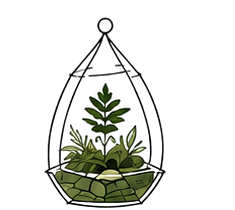
Evaporation
Water leaves the compost and plants as vapour, increasing humidity inside the vessel.
In a closed terrarium, water moves through the soil, plants and air before condensing on the glass and returning to the growing medium.
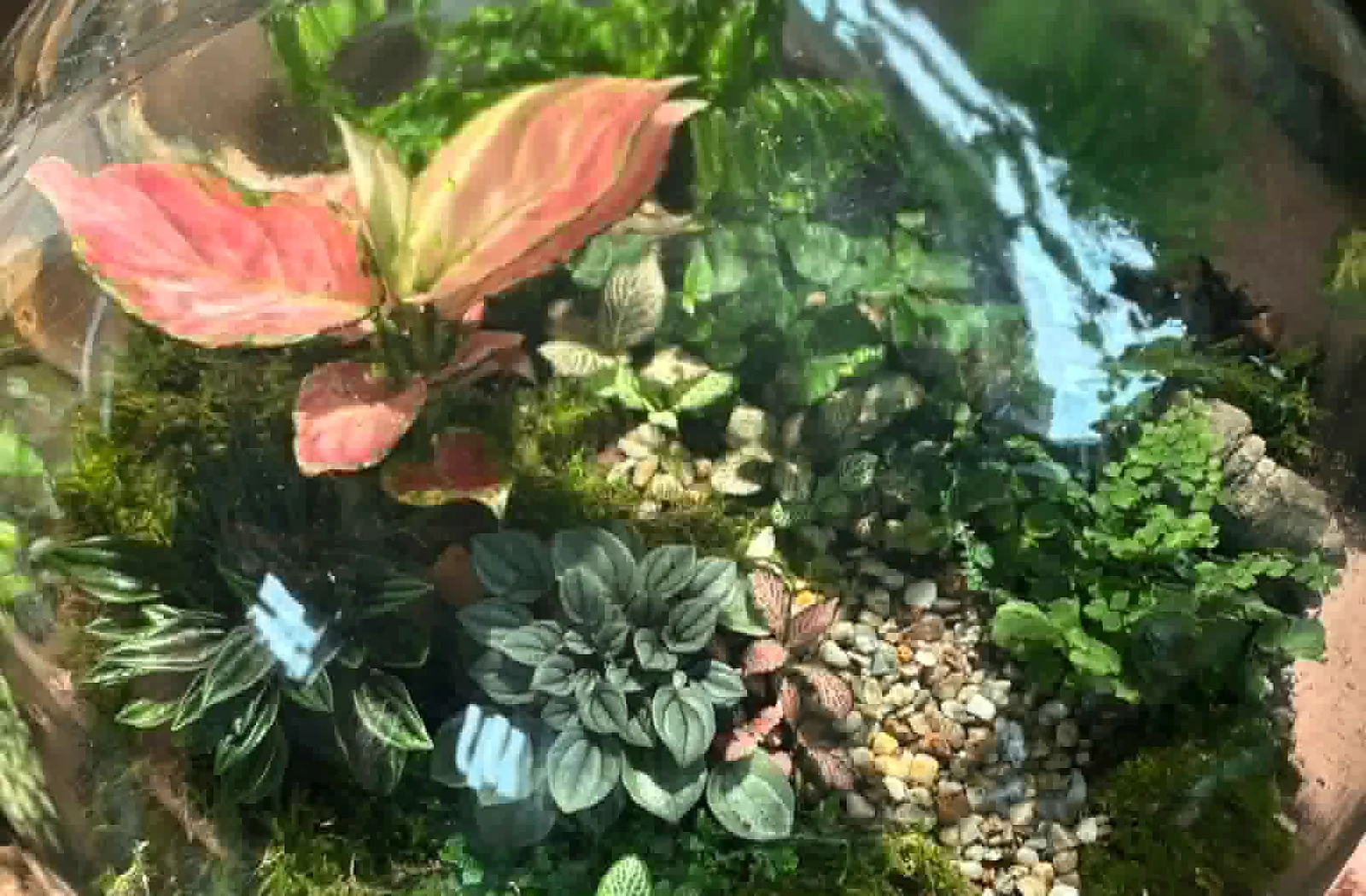
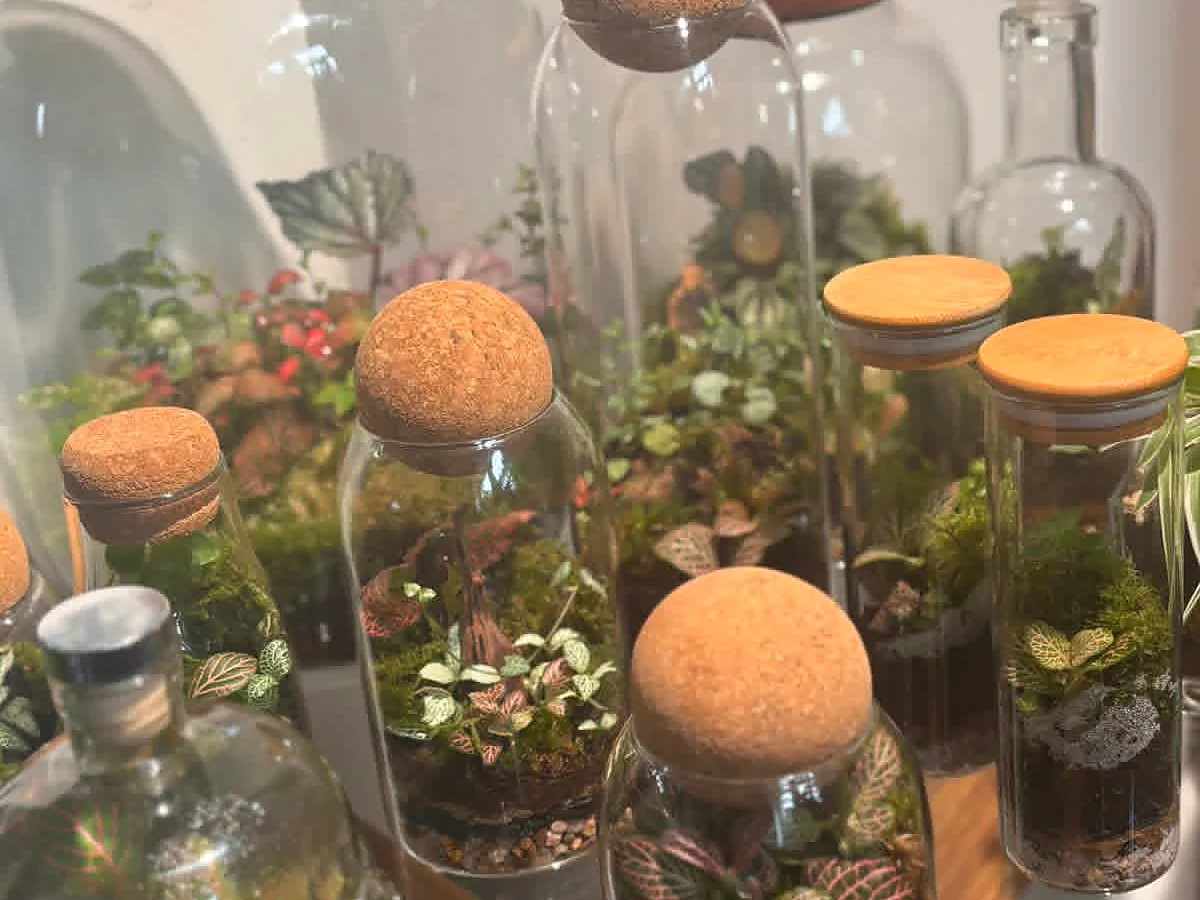
A terrarium is not frozen in the condition in which it was made. Plants continue to photosynthesise, take up water and grow. Leaves age, moss changes and the balance of the composition develops.
This is why observation matters more than a rigid watering calendar. Light, room temperature, vessel size and plant choice all affect how quickly moisture moves through the system.
Water leaves the compost and plants as vapour, increasing humidity inside the vessel.
As the moist air meets cooler glass, droplets form and eventually return to the growing medium.
Plants use light to create the energy they need for growth, which is why adequate indirect light remains essential.
The Royal Horticultural Society recommends bright, indirect light for terrariums, protection from direct summer sun and restrained watering. Kew describes terrariums as enclosed displays of slow-growing plants that can bring greenery indoors with relatively easy maintenance. University of Minnesota Extension similarly advises bright indirect light, sparing water and routine removal of dead leaves or mould.
These general principles support the care guidance used by My Bio-Harmonies. Individual plant combinations may still need adjustments, so the supplied care guide and direct advice should take priority for a particular terrarium.